
Category: Uncategorized
-
Instant Pot Beans
Screenshot -
Creamy Chickpea Pasta
Ingredients
• Chickpeas: 2 cans (rinsed and drained) [00:31]
• Pasta: 1 pound (short pasta shapes work best) [00:36]
• Garlic: Whole cloves (to be removed later) [00:36]
• Fresh Rosemary: 1-2 sprigs [00:36]
• Tomato Paste: 1 heaping tablespoon [02:26]
• Water: 7 cups (boiling water is preferred to save time) [03:02]
• Olive Oil: A generous amount [00:50]
• Salt: To taste [05:16]
• Optional Toppings: Grated cheese or a drizzle of olive oil [07:21]
Cooking Instructions
1. Infuse the Oil: Pour a generous amount of olive oil into a cold pan. Add the garlic and rosemary. Heat slowly to allow the flavors to penetrate the oil without burning the garlic [01:08].
2. Sauté Chickpeas: Once fragrant, add the rinsed and drained chickpeas. Sauté for a few minutes to combine flavors [01:46].
3. Seasoning: Remove the rosemary sprigs and the garlic cloves (you can leave the garlic in if you prefer a stronger flavor) [02:04]. Stir in the heaping tablespoon of tomato paste and sauté for another minute [02:26].
4. Simmer: Add 7 cups of boiling water. Let the mixture simmer for 20 minutes to soften the chickpeas [03:12].
5. Create the Creamy Base: After 20 minutes, take about 3/4 of the chickpeas and some of the liquid out and blend them (using an immersion blender or standard blender) until smooth [04:10].
6. Cook the Pasta: Add the blended chickpea cream back into the pot. Season with salt. Add 1 pound of dry pasta directly into the pot with the remaining whole chickpeas and liquid [05:36].
7. Final Simmer: Cook for about 10 minutes (or until the pasta is done). The liquid should reduce into a thick, creamy sauce that coats the pasta [06:23]. If it looks too dry, you can add a little more water [06:12].
8. Serve: Plate the pasta and finish with a drizzle of fresh olive oil or grated cheese [07:21].
-
Alpha-Gal Syndrome
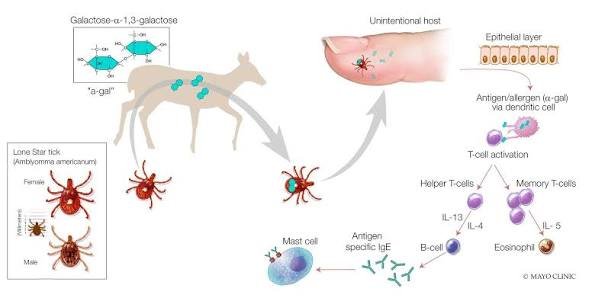
View all
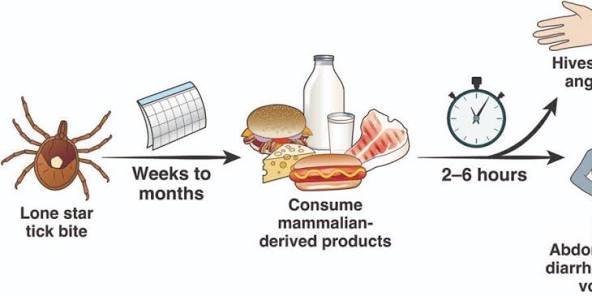
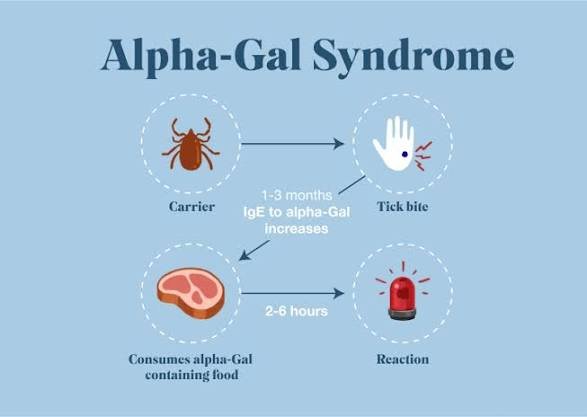
Alpha-gal syndrome (AGS) is a serious, potentially life-threatening allergic condition causing immune reactions to a sugar molecule (galactose-
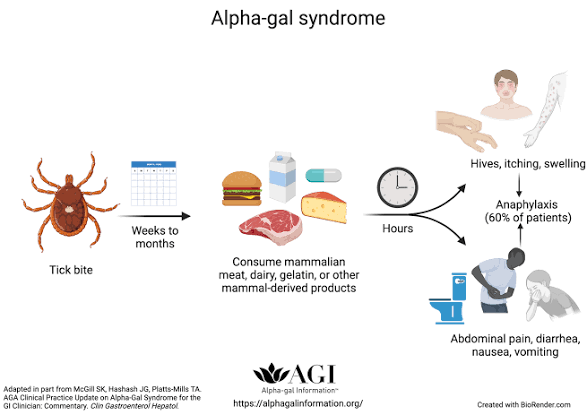
𝛼-1,3-galactose) found in most mammals, typically triggered by bites from lone star ticks. Symptoms often appear 3–6 hours after eating red meat (beef, pork, lamb) or dairy, including hives, stomach issues, and anaphylaxis.
Canada.ca
Key Aspects of Alpha-gal Syndrome:
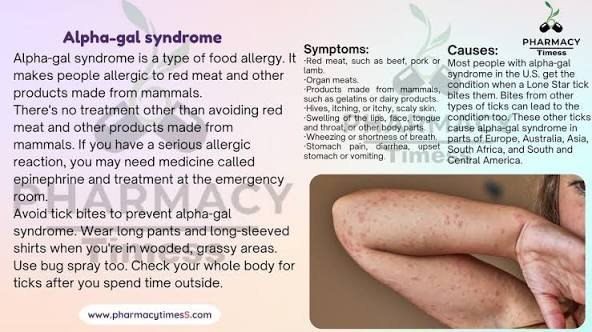
- Causes: Primarily triggered by the bite of a Lone Star tick, which causes the immune system to produce IgE antibodies to the alpha-gal sugar, though other tick species may be involved.
- Symptoms: Reactions are often delayed, occurring hours after exposure, and include hives, rash, nausea, vomiting, severe diarrhea, stomach pain, and potentially life-threatening anaphylaxis.
- Trigger Foods: Mammalian meat (beef, pork, lamb, venison), dairy products, and sometimes gelatin or products containing mammal byproducts.
- Diagnosis: Diagnosed via a specific blood test measuring IgE antibodies to alpha-gal, usually ordered by an allergist.
- Duration: The allergy can last for many years, but sensitivity may diminish over time.
- Prevention: The best protection is avoiding tick bites by using bug spray (DEET), wearing long pants/sleeves in wooded areas, and performing tick checks.
Mayo Clinic +1
There is no cure; management involves strict avoidance of trigger foods and carrying epinephrine for severe reactions.
ORIGINAL ARTICLE
Beneficial Bloodsucking
Parker Crutchfield, Blake Hereth
First published: 22 July 2025
https://doi.org/10.1111/bioe.70015Digital Object Identifier (DOI) VIEW METRICS
ABSTRACT
The bite of the lone star tick spreads alpha-gal syndrome (AGS), a condition whose only effect is the creation of a severe but nonfatal red meat allergy. Public health departments warn against lone star ticks and AGS, and scientists are working to develop an inoculation to AGS. Herein, we argue that if eating meat is morally impermissible, then efforts to prevent the spread of tickborne AGS are also morally impermissible. After explaining the symptoms of AGS and how they are transmitted via ticks, we argue that tickborne AGS is a moral bioenhancer if and when it motivates people to stop eating meat. We then defend what we call the Convergence Argument: If x-ing prevents the world from becoming a significantly worse place, doesn’t violate anyone’s rights, and promotes virtuous action or character, then x-ing is strongly pro tantoobligatory; promoting tickborne AGS satisfies each of these conditions. Therefore, promoting tickborne AGS is strongly pro tanto obligatory. It is presently feasible to genetically edit the disease-carrying capacity of ticks. If this practice can be applied to ticks carrying AGS, then promoting the proliferation of tickborne AGS is morally obligatory.
-
The beautiful tree

2026-02-19